
Ultimate Guide to Crossing Thailand to Laos by Transport

Decades of journeys from Thailand’s bustling cities to Laos’s serene landscapes have been a rite of passage.
The Thailand to Laos Transport connects the region’s most vibrant coasts with its mountainous interiors, shaping travel across Southeast Asia.
Whether you want to drift down the Mekong on a legendary slow boat, catch a budget-friendly international bus. Additionally, there is an option to suit every travel style, budget, and timeline.
This comprehensive pillar guide breaks down every route and method to travel from Thailand to Laos. It covers costs, durations, border checkpoints, and step-by-step logistics for Thailand to Laos Transport.
Understanding the Border: Visas and Checkpoints
Before diving into the transport modes, it is crucial to understand the entry requirements and main crossing points.
Laos offers several options for entry, including eVisa and Visa on Arrival (VoA) for most nationalities. To ensure a smooth transition, you should cross-reference your chosen transit point with authorized international border crossings. For a detailed breakdown of entry requirements, processing times, and fees, consult The Ultimate Laos Travel Visa Guide.
Furthermore, there are dozens of border crossings along the frontier. The most popular include:
- Chiang Khong (Thailand) / Huay Xai (Laos): The primary gateway for those taking the northern water routes.
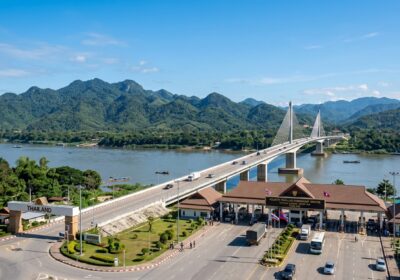
- Nong Khai (Thailand) / Vientiane (Laos): Home to the First Thai-Lao Friendship Bridge, this is the busiest land crossing, perfect for trains and buses.
- Nakhon Phanom (Thailand) / Thakhek (Laos): Ideal for travelers heading to the famous Thakhek Loop.
- Chong Mek (Thailand) / Vang Tao (Laos): The main southern crossing point, leading directly to Pakse.
For an in-depth look at operating hours, scams to avoid, and exact step-by-step procedures at these checkpoints, read our comprehensive Laos Border Crossing Guide.
1. The Scenic Route: By Boat (Slow Boat & Speedboat)
Taking a boat from Thailand to laos is widely considered one of the most iconic, scenic, and rewarding travel experiences in all of Southeast Asia. The route navigates the majestic Mekong River, starting from the Thai-Laos border in the north and ending in the UNESCO World Heritage town of Luang Prabang.
Route: Chiang Khong (Thailand) ➔ Huay Xai (Laos) ➔ Pakbeng (Overnight) ➔ Luang Prabang (Laos)
The Slow Boat to Laos from Thailand
The legendary slow boat to laos from Thailand is a two-day journey that allows you to slow down, disconnect, and take in the dramatic karst cliffs, dense jungles, and remote riverside villages.
Step 1: Get to the Border: Make your way to Chiang Khong in northern Thailand (readily accessible by bus from Chiang Rai or Chiang Mai). If you are exploring the dramatic ridges of the northern border beforehand, you can plan a spectacular route leading up to your crossing; see our guide on traveling from Phu Chi Fa to Laos.
Step 2: Cross into Huay Xai: Cross the Fourth Thai-Lao Friendship Bridge, clear immigration, and take a short tuk-tuk ride to the Huay Xai slow boat pier.
Step 3: Day 1 of the Boat Journey (Huay Xai to Pakbeng): The boat departs around 11:00 AM. You will spend roughly 6 to 7 hours drifting down the river. You will pull into the small outpost town of Pakbeng by late afternoon.
Step 4: Overnight in Pakbeng: You must book a guesthouse for the night (it is best to book in advance during peak season, though guesthouse owners will also meet the boat at the pier offering rooms).
Step 5: Day 2 of the Boat Journey (Pakbeng to Luang Prabang): The boat departs Pakbeng at approximately 9:00 AM, arriving at the Luang Prabang slow boat pier (about 10 km outside the town center) by late afternoon.
Cost: Approximately $25–$35 USD for the public boat tickets (excluding accommodation in Pakbeng and transfers).
Best For: Backpackers, slow travelers, photographers, and those who want to experience local life along the Mekong River.
The Speedboat Option
If you want the water experience but lack the patience for a two-day drift, narrow, motorized wooden speedboats can complete the journey from Huay Xai to Luang Prabang in just 6 to 8 hours.
However, this option comes with a strong warning: Speedboats are incredibly loud, highly bumpy, and can be dangerous when water levels are low due to exposed rocks. Helmets and lifejackets are mandatory. Most travelers strongly prefer the leisurely pace of the slow boat.
2. The Direct & Economical Route: By Bus
If you are looking for a straightforward, point-to-point journey that won’t break the bank, taking a bus from Thailand to laos is an exceptional option. There is an extensive network of “International Buses” run jointly by the Thai and Lao governments that transport passengers directly across borders without requiring you to switch vehicles at the checkpoint.
Popular International Bus Routes
| Departure City (Thailand) | Arrival City (Laos) | Average Duration | Approximate Cost (USD) |
|---|---|---|---|
| Bangkok | Vientiane | 11–12 Hours | $30 – $35 |
| Chiang Mai | Luang Prabang | 18–20 Hours | $45 – $55 |
| Udon Thani | Vientiane | 2 Hours | $3 – $5 |
| Nong Khai | Vientiane | 1 Hour | $2 – $3 |
| Nakhon Phanom | Thakhek | 1.5 Hours | $3 – $4 |
| Ubon Ratchathani | Pakse | 3 Hours | $10 – $12 |
How the International Bus Works
- Book Your Ticket: You can purchase tickets at major bus terminals in Thailand or via reputable online booking platforms like 12Go.Asia.
- Boarding: Board the bus at the designated terminal. The bus will drive directly to the Thai border post.
- Thai Exit: You will disembark the bus with your hand luggage, get your passport stamped out of Thailand, and walk back to the bus.
- No-Man’s-Land Crossing: The bus will drive you across the Friendship Bridge to the Lao immigration post.
- Lao Entry: Disembark with all of your luggage, pass through Lao Customs/Immigration (where you can obtain your Visa on Arrival), and reboard the bus on the other side.
- Final Stretch: The bus will drop you off at the main bus station of your destination city in Laos.
- Best For: Budget-conscious travelers, those departing from regional Thai transport hubs (like Udon Thani or Chiang Mai), and travelers with heavy luggage.
3. The Modern Track: By Train
The transport landscape of Laos has been completely revolutionized in recent years, making train travel one of the most exciting and efficient ways to enter and explore the country.
Route: Bangkok (Krung Thep Aphiwat) ➔ Nong Khai ➔ Vientiane (Khamsavath Station)
The Direct Bangkok to Vientiane Train
State Railway of Thailand (SRT) operates a highly convenient direct overnight train service linking Bangkok’s Krung Thep Aphiwat Central Terminal directly to the newly opened Khamsavath Station in Vientiane.
This service eliminates the need to arrange separate transfers across the Friendship Bridge:
- The Train Journey: The train features comfortable sleeper berths (both first and second-class air-conditioned sleepers are available). It departs Bangkok in the evening and arrives in Vientiane the following morning.
- The Border Protocol: The train stops at Nong Khai station on the Thai side, where passengers disembark to stamp out of Thailand. Once processed, everyone boards the train again to cross the Mekong River to Khamsavath Station in Vientiane, where Lao immigration and customs processing takes place.
The Regional Route (Nong Khai Shuttle)
Alternatively, you can take any regular Thai train from Bangkok to Nong Khai. From Nong Khai, a local shuttle train runs several times a day across the border to Thanaleng Station in Laos. From Thanaleng, you can easily catch a local minivan or taxi into Vientiane.
Connecting to the LCR (Laos-China Railway)
Once you arrive in Vientiane, you can seamlessly connect to the high-speed Laos-China Railway (LCR). This modern, high-speed train connects Vientiane to Vang Vieng (50 minutes), Luang Prabang (2 hours), and Muang Xai, transforming journeys that once took grueling days on winding mountain buses into incredibly fast, smooth rides.
- Best For: Travelers looking for a balance of comfort, scenic views, and modern efficiency, as well as those who enjoy train travel.
4. The Quickest Way: By Plane
If you are short on time and want to skip the overland immigration queues altogether, flying is the fastest, most convenient way to travel.
Direct flights connect Thailand’s major airports with Laos’s primary international gateways: Vientiane (VTE), Luang Prabang (LPQ), and Pakse (PKZ).
Main Flight Routes & Carriers
- Bangkok (BKK/DMK) to Vientiane (VTE): Operates daily via Thai Airways, Lao Airlines, AirAsia, and Bangkok Airways. Flight time is roughly 1 hour and 10 minutes.
- Bangkok (BKK/DMK) to Luang Prabang (LPQ): Operates daily via AirAsia, Lao Airlines, and Bangkok Airways. Flight time is approximately 1 hour and 30 minutes.
- Chiang Mai (CNX) to Luang Prabang (LPQ): Operated by Lao Airlines, providing an exceptionally quick way to hop between northern hubs. Flight time is 1 hour.
Flight Pros & Cons
- Pros: Travel time is reduced to under two hours; you clear customs directly inside a modern airport terminal; and it is a stress-free experience.
- Cons: It is by far the most expensive travel option (ranging from $60 to over $200 USD one-way); it has a significantly higher carbon footprint; and you miss out on the incredible scenery of the overland and river journeys.
Which Transport Method Should You Choose?
| Mode of Transport | Avg. Cost (USD) | Avg. Duration | Key Benefit | Ideal Traveler |
|---|---|---|---|---|
| Slow Boat | $25 – $35 | 2 Days | Unparalleled scenic river views along the Mekong. | Slow travelers, adventurers, backpackers. |
| Bus | $3 – $55 | 2 – 20 Hours | Affordable and direct; vast network of routes. | Budget travelers, families, overnight commuters. |
| Train | $15 – $45 | 1 – 12 Hours | Highly comfortable sleepers; high-speed onward travel. | Comfort seekers, train buffs, eco-conscious travelers. |
| Plane | $60 – $200 | 1 – 1.5 Hours | Fastest option; comfortable and simple. | Business travelers, those with limited vacation days. |
Practical Tips for Your Journey
- Have Cash Ready: Regardless of which border you choose, ensure you have crisp, undamaged US Dollars or Thai Baht for your Lao Visa on Arrival fee. Damaged, torn, or heavily folded bills are frequently rejected by border officials.
- Book Transport in Advance: If you are traveling during the high season (November to March), tickets for the overnight trains, slow boats, and flights book up quickly. Secure your tickets online a few weeks ahead.
- Keep Your Entry/Exit Slips: When you enter Laos, you will be handed a departure slip. Keep this safely tucked inside your passport, as you will need to return it when exiting the country.
- Stay Connected: You can easily purchase a local Lao eSIM online or get a physical Lao SIM card (providers like Unitel or LTC have excellent coverage) immediately after passing through customs at airport terminals, train stations, and land borders.
Final Thoughts
Traveling from Thailand to Laos is more than a transit day. You can glide down the Mekong on a slow boat from Thailand to Laos. Or you can cross the Friendship Bridge by bus from Thailand to Laos. Then you may ride the sleek new train lines, or fly to your destination. Regardless of your choice, you will be captivated by the warmth and beauty of Laos.
For a complete breakdown of where to go, what to eat, and how to structure your itinerary once you arrive across the border, head over to The Ultimate Laos Travel Guide: Plan Your Dream Trip to the Jewel of Southeast Asia and start designing your unforgettable journey today!



One Comment