Slow Boat from Luang Prabang to Thailand (Upstream)

For most travelers backpacking through Southeast Asia, the classic Mekong River route is a one-way street: crossing from northern Thailand into Laos and drifting downstream to the UNESCO World Heritage town of Luang Prabang. However, opting for the reverse route—taking the slow boat laos to thailand—offers a distinct, quieter, and highly rewarding travel experience.
Traveling upstream against the Mekong’s steady current allows you to slow down, bypass the massive tourist crowds, and witness rural Lao river life from a unique perspective. This comprehensive guide covers everything you need to know to navigate the reverse journey from Luang Prabang back to the Thai border at Huay Xai.
Why Choose the Reverse Upstream Route?
While the downstream journey is often packed to the brim with travelers, the upstream slow boat from Laos to Thailand is famously peaceful.
- Fewer Crowds: Because the vast majority of tourists travel downstream, upstream boats are rarely crowded. You will easily find space to stretch out, read, or move around the deck.
- Authentic Interactions: With fewer tourists on board, the vibe is incredibly relaxed. You will have more opportunities to chat with local passengers who use the river ferry as their primary transport between remote villages.
- A Seamless Exit: If your visa is nearing its end, this slow boat journey serves as a highly scenic transit corridor back to Thailand. Make sure to consult our Laos visa guide before finalizing your travel dates to avoid overstay fees at the border checkpoints.
Highlights of the Upstream Route
- Cultural immersion: the daily life of riverside communities, many of them reachable only by boat.
- Panoramic views: the forested mountains of northern Laos rising on both sides of the Mekong, with the river narrowing into dramatic gorges on day two.
- A relaxed, social atmosphere: open-air decks, space to move around and time to talk with travellers from all over the world.
- A smooth arrival in Thailand: you finish in Chiang Khong, ready to explore the temples of northern Thailand.
The 2-Day Itinerary: Luang Prabang to Huay Xai
The slow boat journey takes two full days, with an overnight stop in the small, riverside town of Pakbeng. Because you are traveling upstream against the current, the daily travel times are slightly longer than the downstream counterpart.
Day 1: Luang Prabang to Pakbeng (Approx. 8 to 9 Hours)
Your journey begins early in the morning in Luang Prabang. Unlike downstream arrivals, which land close to the town center, the upstream departure pier is the Luang Prabang Slow Boat Pier, located about 10 kilometers north of the city in Luang Prabang’s suburbs.
- Getting to the Pier: You will need to take a tuk-tuk from the town center to the pier. Most tuk-tuk drivers know the schedule and will bundle passengers together for a shared fare.
- The Journey: The boat departs around 8:30 AM. As you head upriver, the river narrows, and the dramatic karst cliffs rise sharply from the banks. You will pass remote ethnic minority villages, water buffaloes cooling off in the shallows, and local fishermen casting nets.
- Arriving in Pakbeng: You will pull into the hillside town of Pakbeng around dusk. Pakbeng exists almost entirely to service the slow boat route. There are plenty of guesthouses and restaurants lining the main road climbing up from the river.
Day 2: Pakbeng to Huay Xai (Approx. 9 to 10 Hours)
Day two is the longer leg of the journey as the river currents become stronger closer to the Thai border.
- Morning Departure: Boats generally leave Pakbeng by 8:00 AM. Be sure to buy sandwiches, fruit, and plenty of water from local vendors before boarding, as options on the boat are limited to basic snacks and instant noodles.
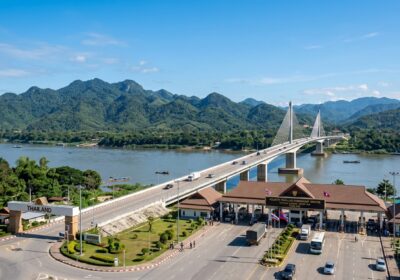
- Arrival in Huay Xai: You will arrive at the Huay Xai slow boat pier in the late afternoon. From here, you can easily catch a local tuk-tuk to the Fourth Thai-Lao Friendship Bridge to cross into Chiang Khong, Thailand.
Navigating the Border Crossing
Once you arrive in Huay Xai, crossing back into Thailand is relatively straightforward, but it requires careful attention to operating hours and transport logistics.
To ensure a seamless transition between countries, consult our detailed Laos border crossing guide, which covers the exact steps for exit stamps, shuttle buses across the Friendship Bridge, and obtaining your Thai entry visa.
If you plan to explore the stunning northern highlands of Thailand immediately after crossing, Chiang Khong serves as an excellent gateway to the Phu Chi Fa border region, famous for its spectacular sunrise sea of mist over the hills of Laos.
Arriving in Chiang Khong and Travelling On
Once you are stamped into Thailand you are in Chiang Khong, a quiet riverside town with guesthouses, cafés and views back across the Mekong to Laos. Because the boat reaches Huay Xai in the late afternoon, many travellers cross the border and spend the night here, or stay in Huay Xai and cross the next morning. Have your passport and visa documents ready for the crossing.
- Across the border: our transfer from Houay Xai to Chiang Khong takes care of the bridge crossing.
- To Chiang Rai: about two hours by road. Book the bus from Houay Xai to Chiang Rai, or the morning trip back if you stay the night.
- To Chiang Mai: take the direct bus from Houay Xai to Chiang Mai.
Short on time? The train from Luang Prabang to Chiang Rai combines the high-speed train to Na Teuy with a van to Huay Xai, so you reach the border in one day instead of two and arrive in Chiang Rai the next morning. Our Luang Prabang to Chiang Rai guide compares the boat, bus and train.
Essential Tips for the Upstream Journey
To make your two-day voyage on the Mekong River as comfortable as possible, keep these practical tips in mind:
1. Seating and Comfort
Most slow boats use old car seats that are not bolted to the floor. While comfortable at first, sitting for nine hours can be taxing. Consider buying or bringing a small travel cushion. Since upstream boats are rarely full, feel free to move your seat around to find the best view or shade.
2. Prepare for Changing Temperatures
The mornings on the Mekong can be surprisingly chilly and windy, especially during the dry season (November to February). Bring a light jacket or windbreaker for the early hours. Conversely, the afternoons get incredibly hot, so sunscreen, sunglasses, and a hat are essential.
3. Food and Drinks
While most slow boats sell cold Beerlao, soft drinks, and instant noodles, they do not serve full meals. Stock up on fresh baguettes, pastries, and snacks in Luang Prabang on Day 1, and replenish your supplies in Pakbeng on the morning of Day 2.
4. Cash is King
Ensure you have enough Lao Kip (LAK) or Thai Baht (THB) before leaving Luang Prabang. While Pakbeng has a couple of ATMs, they are notoriously unreliable. You will need cash for your accommodation, dinners, and morning snacks in Pakbeng, as well as the tuk-tuk and bus fares at the border.
Conclusion
Taking the slow boat laos to thailand is more than just a transit option; it is a meditative travel experience that harks back to the golden age of overland exploration. By reversing the traditional route, you swap crowded vessels and rushed schedules for a peaceful, slow-paced adventure up one of the world’s most legendary rivers.
Travelling downstream instead? Our slow boat from Thailand to Laos guide covers the classic route from Chiang Rai to Luang Prabang, and our Pak Beng guide covers the overnight stop in both directions.